Tag: mould

  • DEMOULDING SLOPE

    Demoulding of precast member without damage to either the components like lifter or mould is critical to successful replication process for the particular complicated design. During mould design, the designers concentrate to make minimum draft (nearly 10 ) on mould to wherever the possible  to minimize demoulding force and resultant stress on lifters and prevent on weaker part of the precast member.

    For Example,
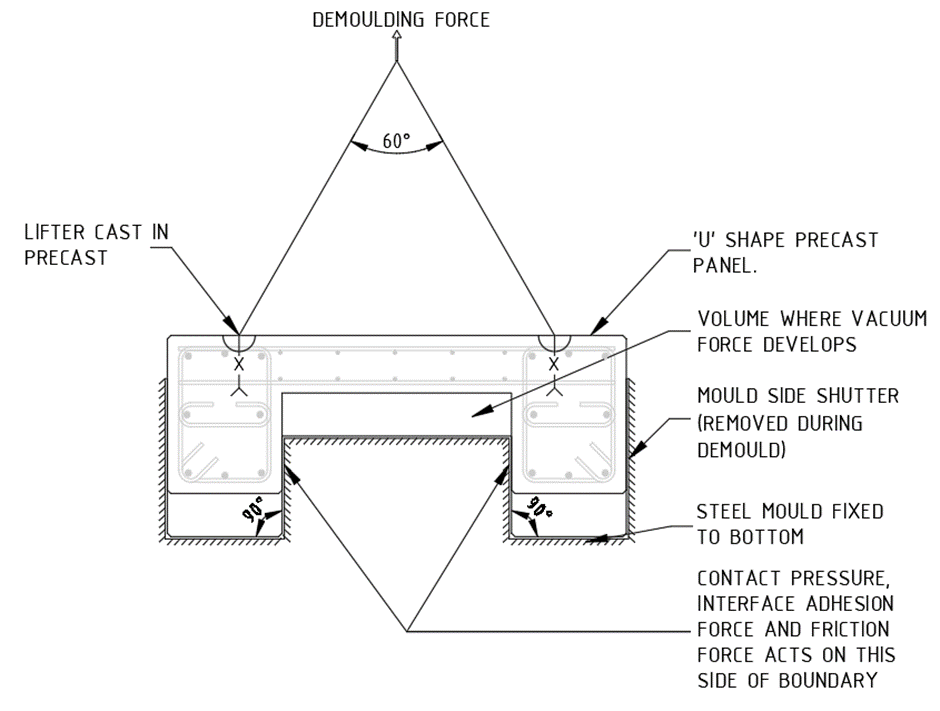
    CONTRIBUTORS DURING DEMOULDING WITHOUT SLOPE

    The above picture shows influencing factors for demoulding force. In this case the resultant DEMOULDING forces like vacuum & friction (Area of contact, Coefficient of friction & Normal contact Pressure) along with self-weight of precast will increase demoulding force. If the demoulding force exceed the lifter capacity limit leads to fail the lifters. So, we can’t able to lift this precast member. To eliminate this type of failure. We need to provide slope where contact pressure or interface adhesion develop.
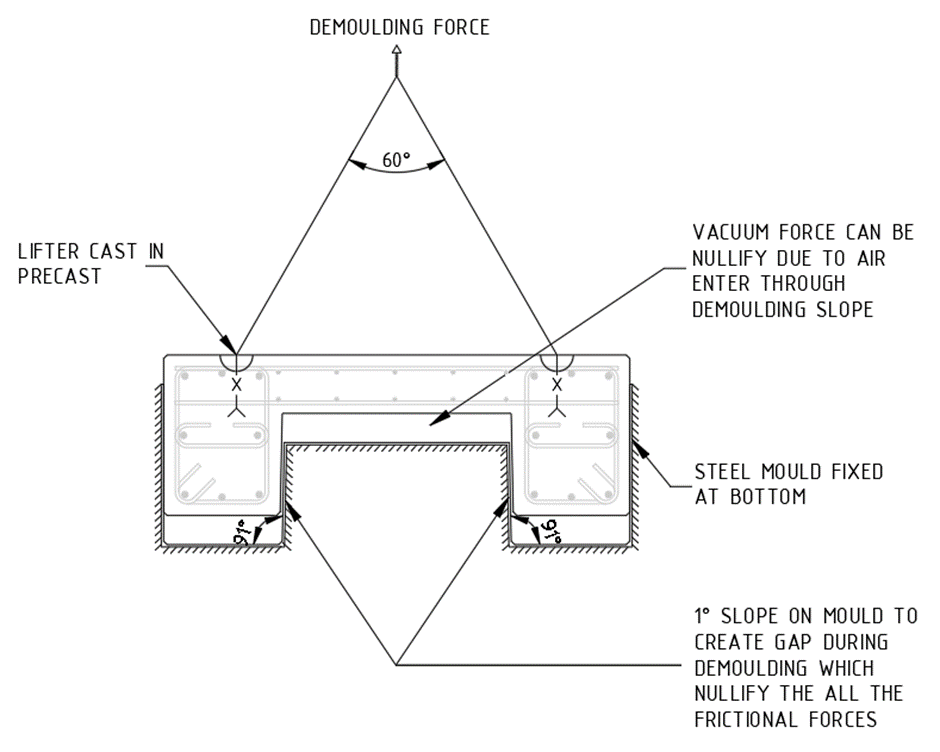
    CONTRIBUTORS DURING DEMOULDING WITH SLOPE

    The above picture shows the effect of demoulding slope. Where the 10 slope didn’t affect too much the original shape of precast, but considerably minimize the demoulding force. The slope reduces the frictional force & provide passage to air enter where vacuum force develops.
  • The Signficance of the “Mould” Face in Precast Panel Detailing

    The Mould Face

    This post attempts to explain the following two questions, for those starting to learn the precast trade:

    • A lot of fancy words are thrown around. Near face. Far face. And mould face. What does it all mean?
    • How should shop drawings be marked vis-a-vis the mould face, and why should they be marked as such?

    What is a precast panel?

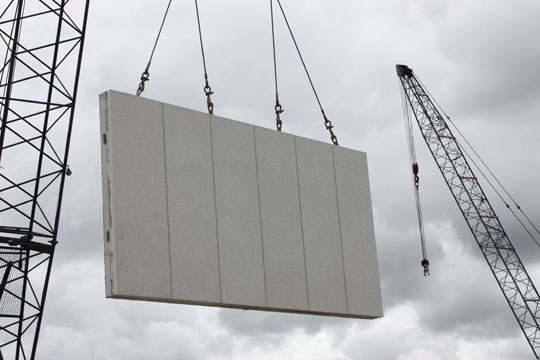
    These my friends are precast panels:


    What panels look like.


    • You can build things quickly and cheaply, if you build with precast panels. Your other option is to fabricate on site. The problem with this is that it: (i) is more expensive, and (ii) the construction is a lot slower.

    What is the mould face?

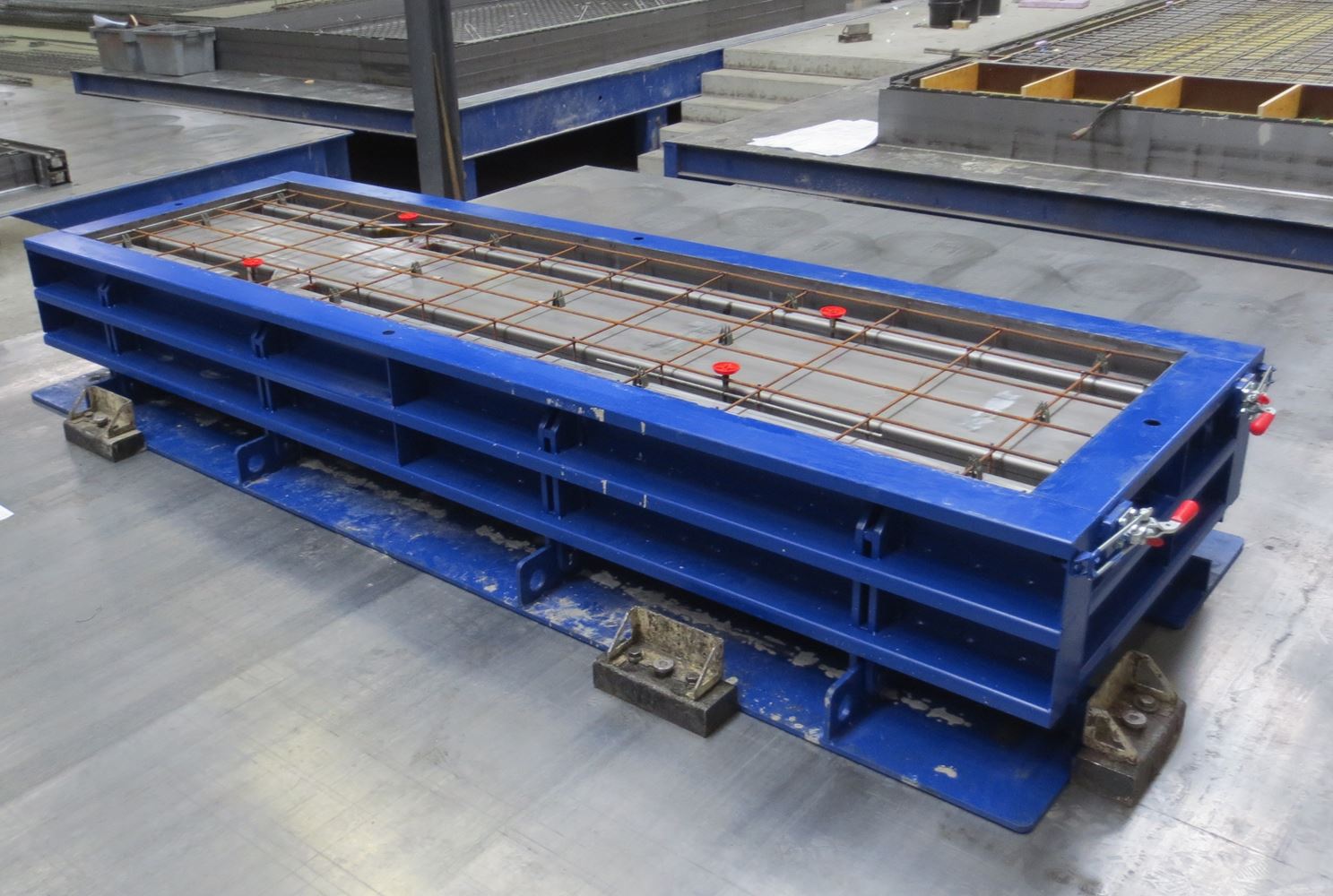
    • First you have to understand how the panels are “fabricated” (i.e. how they are made). Concrete is poured into a mould, on a table. It looks something like this:


    Showing a panel on a table, in its mould.

    So then what is the near face / far face / mould face?

    • The near face is the side of the panel which is exposed to the air. This is the face of the panel which you can see.
    • The far face (or mould face), is the face of the panel which is lying on the table.

    What is the significance of the mould face?

    • The mould face has a smooth finish (or should have one).
    • You do not want a building which has the ugly face of a panel exposed for everyone to see. The architect will be baying for your blood, and moreover it is a very costly remedy. Some precasters, in order to avoid this problem, “trowel” the near face (i.e. the face which is exposed to the air). “Trowelling” is when you smooth the surface of the panel with a tool so that it looks nice.

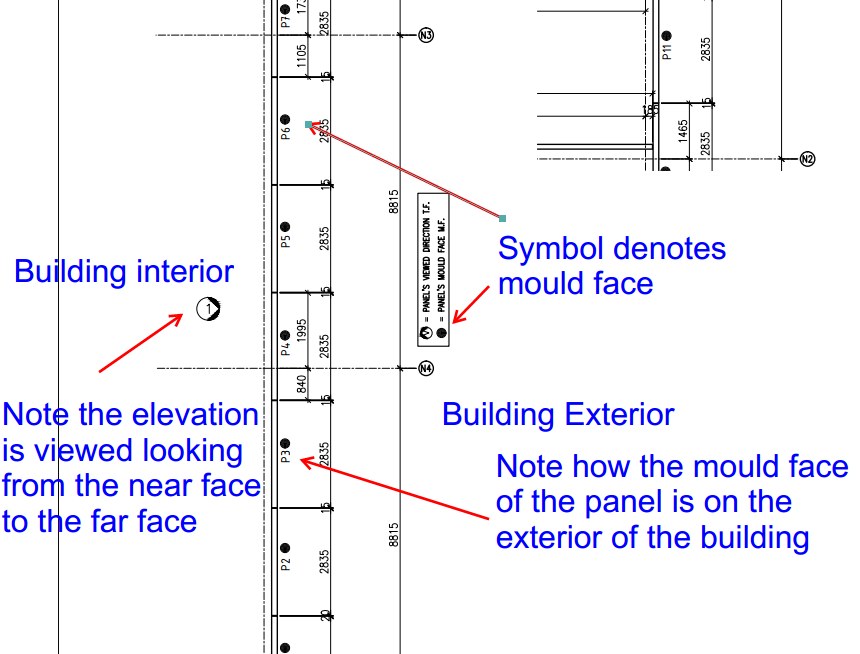
    When you draw a panel, you want to indicate on your drawings that the mould face is on the building exterior.

    • Why? So that the smooth side is seen by people and the ugly side is hidden from view.
    • “But won’t people on the inside of the building also see the ugly side of the panel?” you ask. Not necessarily. Most of the time, the panel is not visible on the inside of the building because the architect will put up plaster or there will be something hiding the panel from view.

    Standard Shop Drawing Practices

    • People draw elevations assuming they are looking at the near face first, rather than the far face.


    This diagram should certainly clear things up for you:


    Shows the near face and far faces on the marking plan – also notes where the exterior of the building is.


    I hope you learned something. Any questions, please ask.